About Doug Welmaker
Plaintiff-Side Overtime Attorney
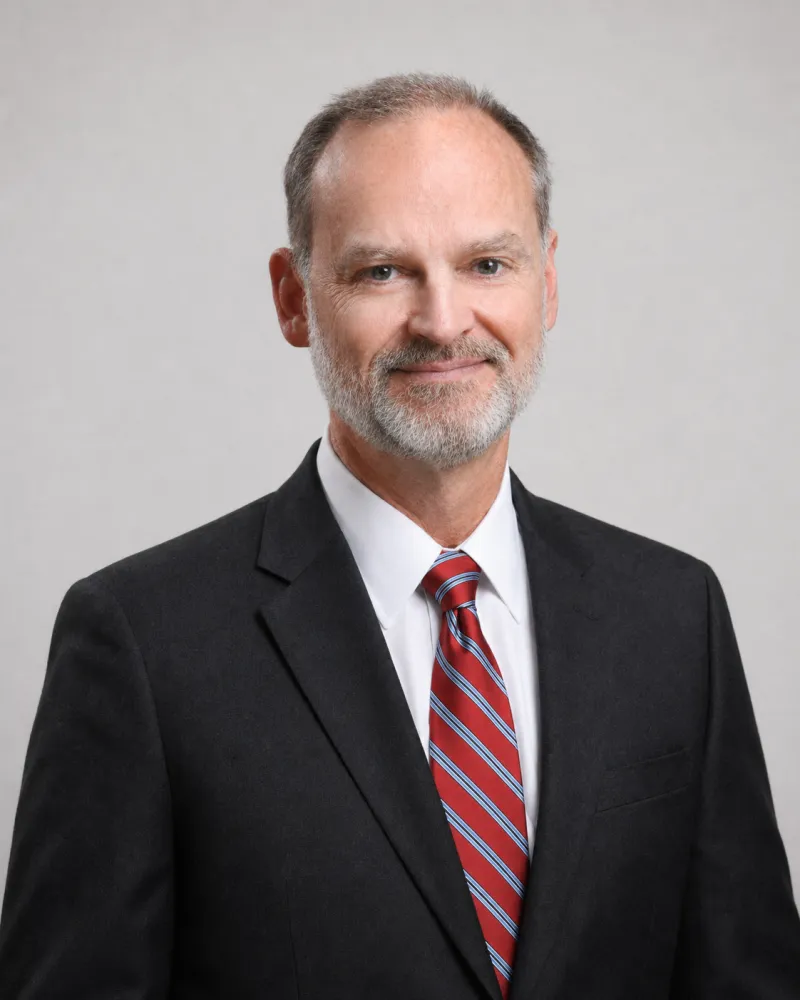
Douglas B. Welmaker
Unpaid Overtime Attorney
Representing Workers Nationwide
Thirty years. Thousands of workers. One focus: recovering the overtime pay you're owed.
Over thirty years of practicing law, the past fifteen focused entirely on unpaid overtime cases, I have represented thousands of workers who were not paid for every hour they worked. My clients have come from nearly every industry: oilfield workers, nurses, construction superintendents, delivery drivers, commercial cleaners, dispatchers, and home care workers, among others.
What I have learned is that overtime violations follow predictable patterns. Employers misclassify workers as independent contractors to avoid paying overtime. They classify salaried workers as "exempt" when the law doesn't support it. They shave hours from time records or pressure workers to work off the clock. These practices are rarely accidents.
Every case I take is an overtime case. That focus is what lets me evaluate a situation quickly, identify the strongest theory the facts will support, and move efficiently toward recovery for my clients.
If you believe you weren't paid for every hour you worked, I'd like to hear about it.
How do I work with new clients?
I work on a contingency fee basis. That means you never pay anything out of pocket if there is no recovery, not even the costs. The system is designed so that working people can enforce their rights without financial risk.
I offer free consultations to every potential client. During that call, I will give you an honest assessment of your situation. If you have a case, I will explain exactly what it looks like, what you can expect to recover, and how the process works. If you do not have a case, I will tell you that too. Either way, you will never owe me anything for the consultation.
I believe in being direct. I will tell you the strengths and weaknesses of your claim, the realistic range of outcomes, and what I need from you to build the strongest possible case. No sugarcoating, no false promises.
Where do I handle cases?
I am admitted in federal courts in Texas (Eastern, Northern, Southern, and Western Districts), Arkansas (Eastern and Western Districts), California (Southern District), Indiana (Northern and Southern Districts), Louisiana (Eastern, Middle, and Western Districts), Missouri (Western District), Nebraska, New Mexico, North Dakota, Oklahoma (Eastern, Northern, and Western Districts), Wisconsin (Western District), and the Fifth Circuit Court of Appeals. Overtime law is federal, and federal courts operate under the same procedural rules whether the case is filed in the Eastern District of Texas or the Western District of Wisconsin. When a worker has a strong overtime case in a federal district I am admitted in, I take the case regardless of which state the work was performed in. If a case requires admission in a federal district not already on that list, I handle the admission as part of the case.
What types of overtime cases do I handle?
My practice covers the full range of overtime violations: independent contractor misclassification, salary/exempt misclassification, off-the-clock work, automatic meal break deductions, day rate violations, tip credit violations, retaliation for asserting overtime rights, and collective actions under Section 216(b).
I represent workers in every industry, with particular depth in oilfield services, healthcare, construction, trucking, fiber optic installation, staffing companies, and residential care.
Credentials
- Texas Bar No. 00788641, licensed since 1993
- J.D., South Texas College of Law (1993): top 15%, Assistant Editor of the Law Review, AmJur Award in Torts
- B.A., The University of Texas at Austin (1989)
- Federal admissions: Fifth Circuit Court of Appeals; E.D. Ark.; W.D. Ark.; S.D. Cal.; N.D. Ind.; S.D. Ind.; E.D. La.; M.D. La.; W.D. La.; W.D. Mo.; D. Neb.; D.N.M.; D.N.D.; E.D. Okla.; N.D. Okla.; W.D. Okla.; E.D. Tex.; N.D. Tex.; S.D. Tex.; W.D. Tex.; W.D. Wis.
- Speaker, National Employment Lawyers Association (NELA), on technology-assisted plaintiff-side practice
- Prior practice: management defense side before moving permanently to the plaintiff side, which means I have seen the defense playbook from the inside
Frequently Asked Questions
How long has Doug Welmaker been practicing wage and hour law?
I have been a Texas-licensed attorney for more than thirty years and have focused on Fair Labor Standards Act overtime cases for the past fifteen years. That fifteen-year focus is what shapes my current practice. Every case I take is an overtime case, which means I work on the same body of law every day. That kind of repetition builds depth on the specific questions that recur across cases: salary basis, duties tests, the economic reality test for independent contractor status, off-the-clock work, day rate compensation, and the recovery rules. I do not split my attention across other practice areas.
What states does Welmaker Law handle cases in?
I am admitted in federal courts in Texas (Eastern, Northern, Southern, and Western Districts), Arkansas (Eastern and Western Districts), California (Southern District), Indiana (Northern and Southern Districts), Louisiana (Eastern, Middle, and Western Districts), Missouri (Western District), Nebraska, New Mexico, North Dakota, Oklahoma (Eastern, Northern, and Western Districts), Wisconsin (Western District), and the Fifth Circuit Court of Appeals. Most of my active docket is in the Texas federal districts, but overtime law is federal and federal courts operate under the same procedural rules across the country. When a worker has a strong overtime case in a federal district I am admitted in, I take the case regardless of which state the work was performed in. If a case requires admission in a federal district not already on that list, I handle the admission as part of the case.
Why does the firm focus only on overtime cases?
Overtime law is more technical than most people realize. The exemption regulations alone fill multiple sections of the Code of Federal Regulations, the case law is jurisdiction-specific, and the calculation rules turn on details that vary by pay structure. Day rate workers, commission-only workers, and salaried workers each require different analytical approaches. I focus only on overtime cases because I want to be good at the law I practice. A worker who hires me gets an attorney who has spent the past fifteen years working on the same statute, the same regulations, and the same body of federal case law. That focus is what allows me to evaluate a case quickly and to identify the strongest theory the facts will support.
Does Welmaker Law represent employers?
No. Welmaker Law is a plaintiff-side firm. I represent workers exclusively. I do not represent employers in wage and hour disputes, I do not handle defense-side employment counseling, and I do not write workplace policies for businesses. The firm is structured around one thing: helping workers recover overtime pay that should have been paid the first time. If you are an employer looking for wage and hour compliance counsel, I am not the right attorney, but I am happy to refer you to defense-side wage and hour attorneys who handle that work.
Can workers from other states hire Welmaker Law?
Often yes, depending on where the case can be filed. Overtime law is federal, so federal-court venue and personal jurisdiction over the employer drive the analysis more than the worker's home state does. I am admitted in federal courts across Texas, Arkansas, California (Southern District), Indiana (Northern and Southern Districts), Louisiana (Eastern, Middle, and Western Districts), Missouri (Western District), Nebraska, New Mexico, North Dakota, Oklahoma (Eastern, Northern, and Western Districts), and Wisconsin (Western District). If the employer is based in or does business in one of those districts, the case may be a fit even if the worker lives in another state. The threshold question is where the employer can be sued, not where the worker lives. The fastest way to know is a free phone call. I will tell you in the first conversation whether the case is a fit.
How much does it cost to talk to an overtime lawyer?
The first conversation is free. There is no obligation, no retainer, and no fee for the consultation itself. If we agree the case is a fit and the firm takes the case, I work on a contingency fee basis. My fee is a percentage of the recovery, agreed to in writing before the case starts. You do not pay anything out of pocket, you do not pay during the case, and if there is no recovery, you pay nothing, not even the costs. I only get paid if you do. That structure is what makes it possible for working people to enforce their overtime rights without financial risk.
What should I have ready for the first call?
The most useful thing you can have ready is a basic timeline of your employment: when you started, when you stopped (or whether you are still working there), what your job title and duties were, and how you were paid (hourly, salary, day rate, commission, or a combination). If you have pay stubs, W-2s, 1099s, or any written agreement with the employer (offer letter, contractor agreement, employee handbook), having them in front of you during the call helps me give you a faster and more accurate read on the case. If you do not have those documents, that is fine. We can still have the conversation. The first call is about understanding what happened, not about producing documents.